
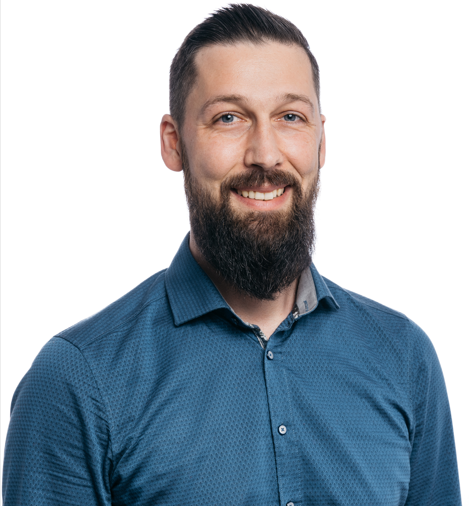
Christoph Götz
I turn detection AI into regulated, reimbursed clinical products — evidence, regulatory class, IP, and the payer pathway designed as one system.
7 CE/FDA clearances · NICE-recommended · portfolio validated in ~60 peer-reviewed papers · Co-founder, ImageBiopsy Lab · PhD, quantum biology
Rigor over hype. Systems over tools. Traceability over black boxes.
Most medical AI dies in the gap between "the model works" and "someone pays for it in the clinic." I build the bridge across that gap as one object: the clinical evidence, the MDR/FDA classification strategy, the IP position, and the reimbursement pathway, designed together instead of thrown over walls between departments.
I proved it in musculoskeletal and osteoporosis imaging: the largest portfolio of regulatory-cleared MSK AI, NICE-recommended for NHS use, and payer negotiations underway. The method is not disease-specific. It is a system for making any detection algorithm into a product a health system will adopt and fund.
Since school I have been circling the same few questions from different angles: how living systems process information, and how you build things that hold up when reality tests them. Physics, then quantum biology, then whole-brain neuroscience, then machine learning, then eight years of making machine learning medically real — evidence, regulatory class, IP, and reimbursement as one design problem. I don't collect fields. I triangulate one target from new directions, and I go deep enough in each to leave artifacts: publications, seven regulatory clearances, patent positions, a NICE-recommended product.
The record: 7 CE/FDA clearances across 9 products, 100+ clinic deployments at 95% retention, a quality architecture designed for 200-FTE scale, partnerships from OEMs to insurers, €10M+ raised. Built as CTO first (the AI foundation, four CE-cleared products in 24 months), then as COO (everything above the model).
How I work: I claim the seams, not the layers. I have personally operated everything from loss functions to payer negotiations — deep enough at every layer to work it myself, and at the layers where products actually die, regulatory strategy, evidence design, and the payer pathway, I am the specialist. The rare part isn't the breadth; it's that the layers interlock in one head. A decision at the model layer has consequences at the regulatory and reimbursement layers; I catch them before they cost a year.
Not good for: unnecessary meetings, or "that's how it's always been done."
Featured Work
 Christoph Götz
 Christoph Götz
 Christoph Götz
Background
1 · Foundations: from the model up PhD in quantum biology and neuroscience — quantum tunneling in olfaction, whole-brain calcium imaging at terabyte scale. Built ImageBiopsy Lab's AI foundation as CTO: training architecture, custom loss functions, model factories. I speak to ML specialists as a peer, which is where trust at every other layer starts.
2 · Clinical evidence architecture Evidence portfolios that survive hostile review: cohort design, retrospective versus prospective strategy, the modelled-versus-realized discipline. The products I built carry roughly 60 peer-reviewed publications — most of them from independent groups in 13 countries — covering every level of the diagnostic-efficacy hierarchy, from technical accuracy through diagnostic impact to mortality prediction and healthcare cost. That top of the pyramid is what HTA bodies and payers actually require, and almost no medical AI has it.
3 · Regulatory strategy Not paperwork — strategy: classification arguments, clinical-investigation scoping, significant-change judgment. Seven CE/FDA clearances, quality architecture designed for 200-FTE scale, personal statutory responsibility (PRRC) across the portfolio.
4 · IP architecture Patent positions designed to interlock with the product and the pathway rather than decorate the pitch deck. The moat logic — what to claim, what to keep as trade secret, what to publish defensively — designed together with the evidence and regulatory strategy, not after them.
5 · Market access & reimbursement The layer most medical AI never reaches: health-economics design payers accept, HTA processes, reimbursement pathways from FLS models to national screening conversations. This is where a cleared product becomes a funded one.
DIFFERENTIATOR
The rare thing is not breadth. Plenty of people have touched several of these layers. The rare thing is that the clinical claim, the regulatory class, the patent interlock, and the payer's budget logic are one design problem in one head — and most regulated AI dies between the departments that hold them separately. That is where I work.
GOOD-FOR
- Turning deep tech into regulated, reimbursed, revenue-bearing products
- Regulatory and evidence strategy that survives hostile review
- Health-economics design that payers accept
- IP positions that interlock with the product instead of decorating it
- Partnerships where the incentives actually align
- Teaching and advising: regulated-AI product strategy, from algorithm to reimbursement
Contact
For collaborations, speaking, or advisory opportunities.
LinkedIn: www.linkedin.com/in/chgtz/
Email: christophgoetz@gmail.com
Blog: Recent writings →
Based in Germany/Austria